Decisions, informed.
Trusted by leading agencies and brands















Run every cadence with agents.
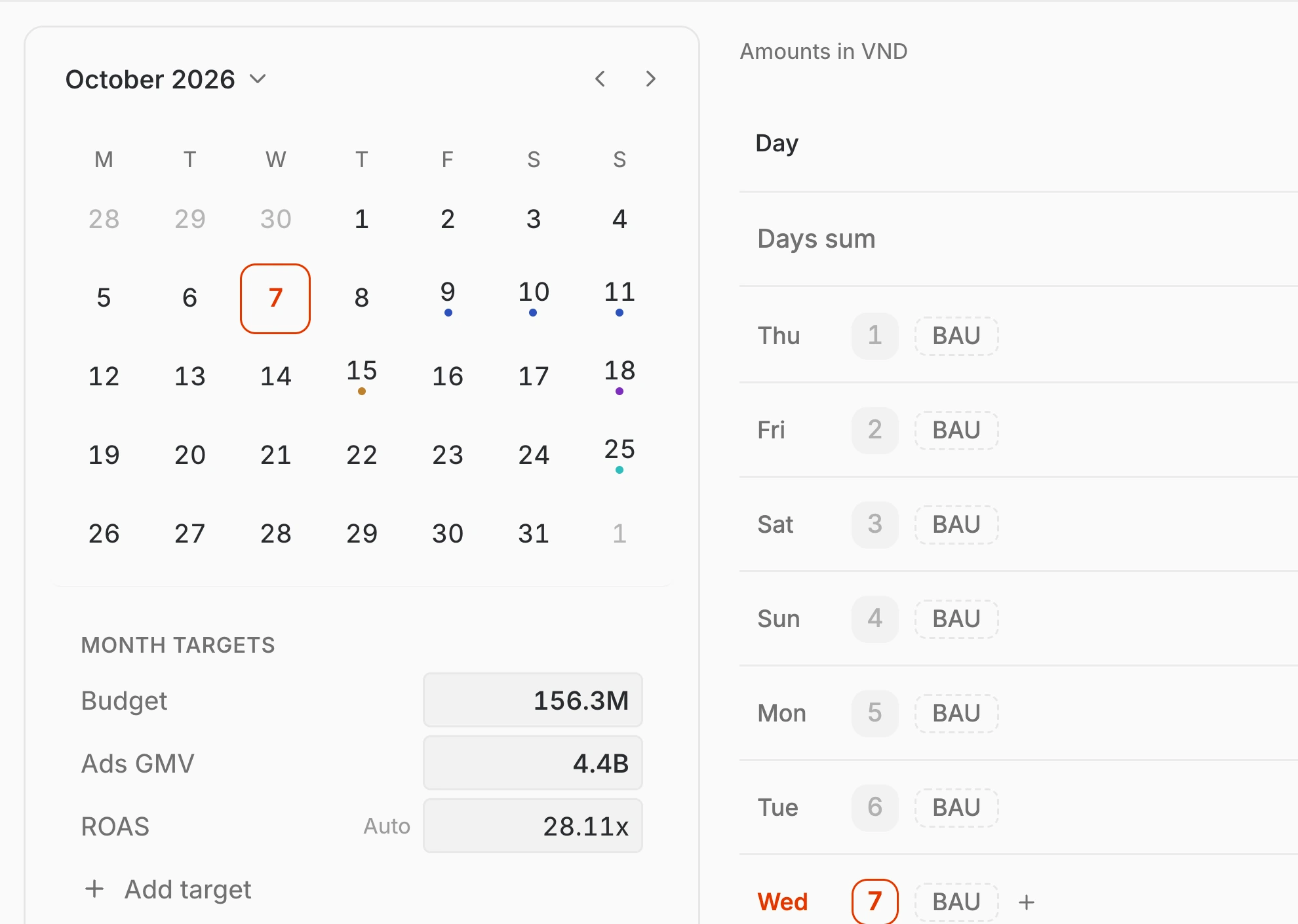
Plan the month by day type
Mark double days, paydays and brand days once, then set budget, GMV and ROAS for every market against them.
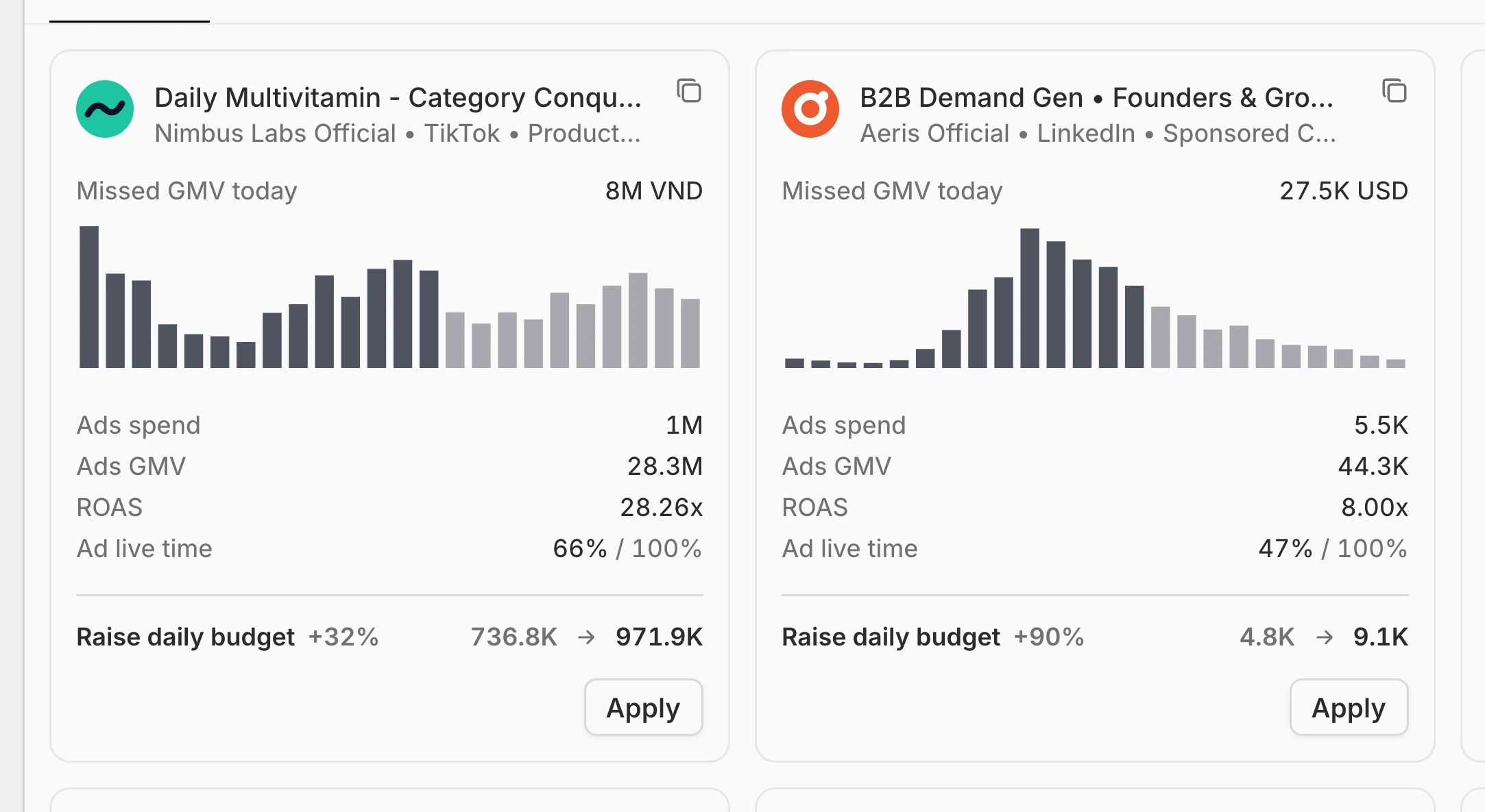
Weigh a recommendation with its evidence
Every proposal arrives with the data behind it and the money attached, so approval rests on proof.
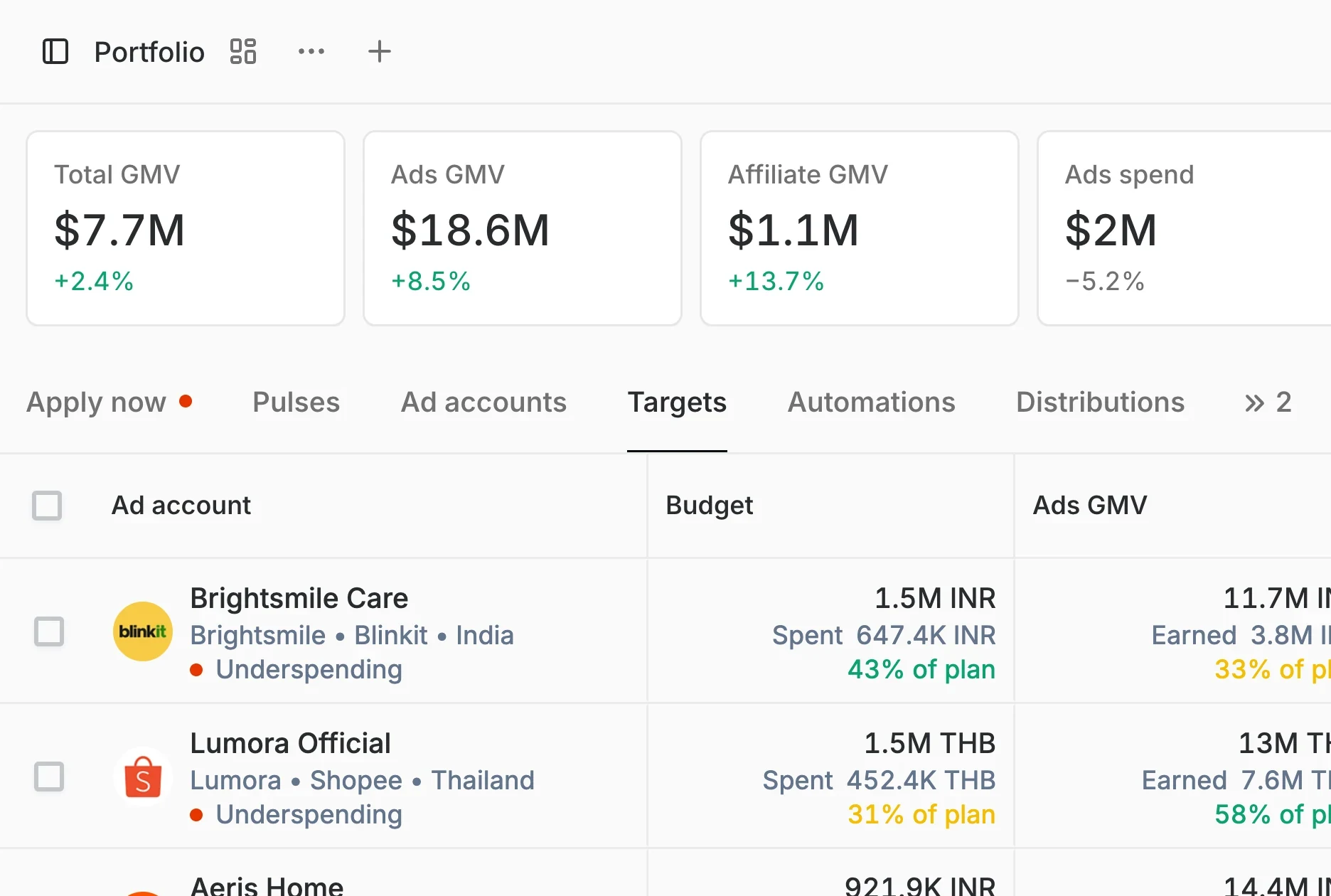
Hold every market to a target
Pacing against plan shows which market is ahead, which is behind and what closes the gap.
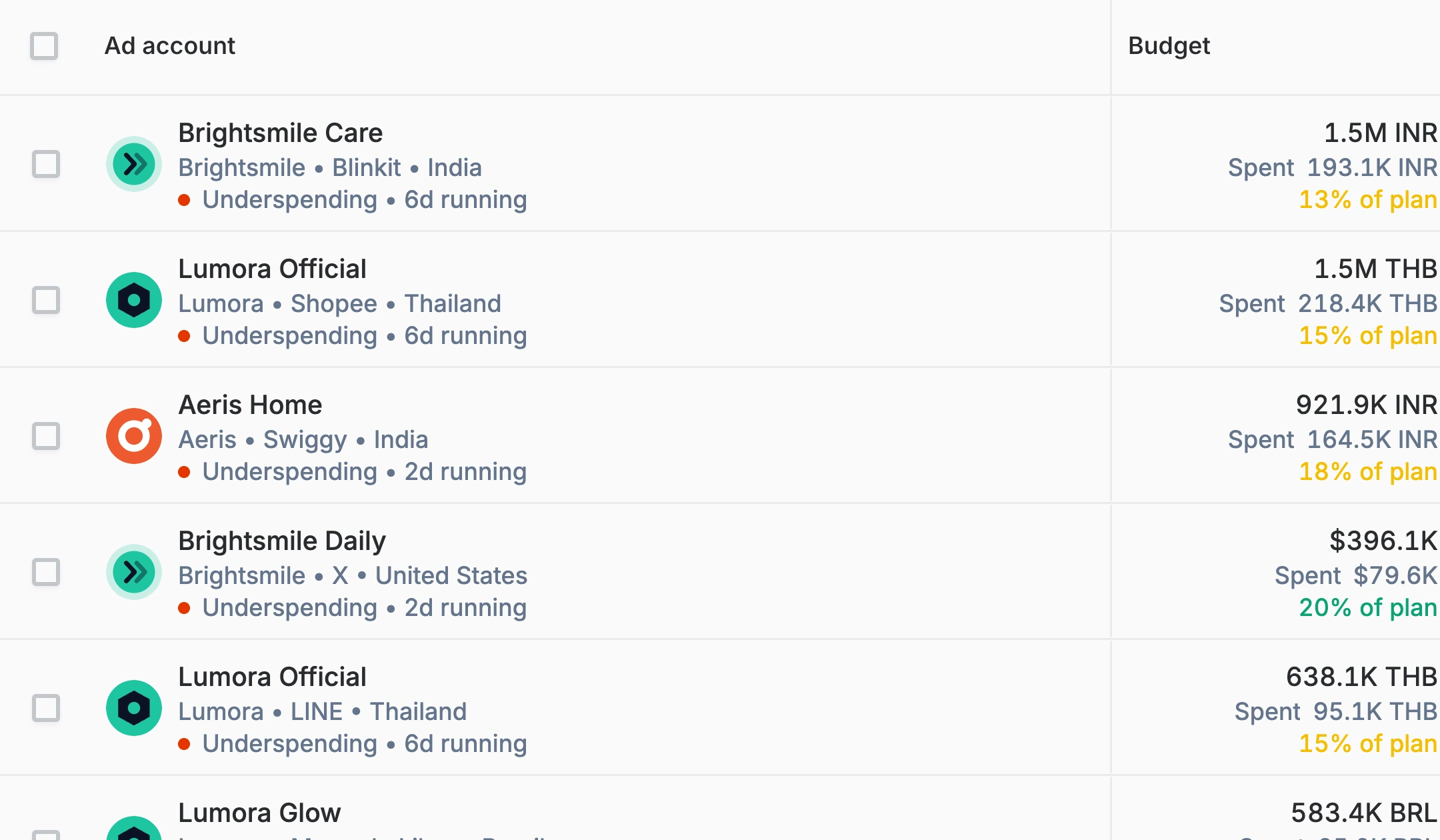
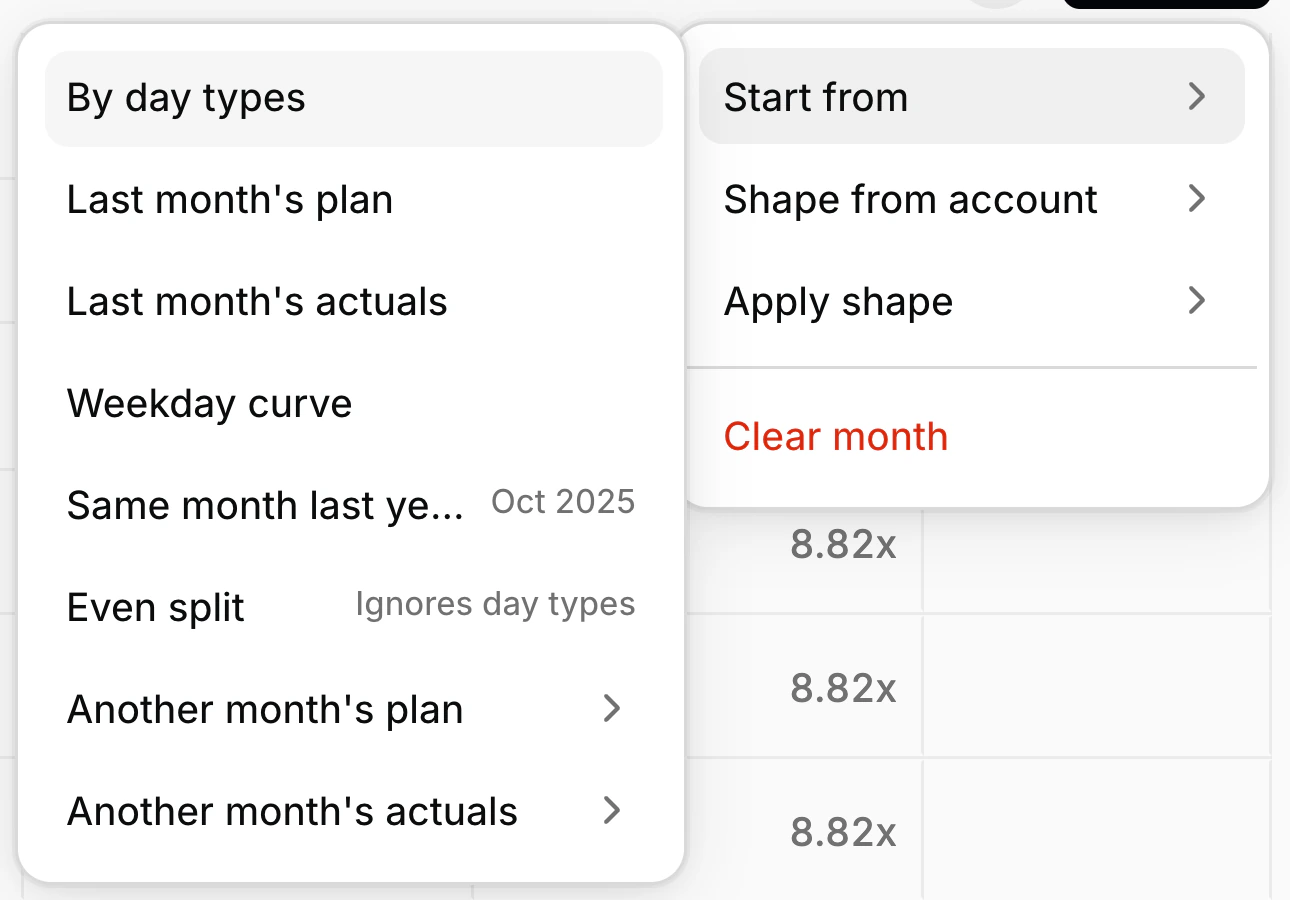
Start the plan from a past month
Begin from last month's plan or actuals, the weekday curve, the same month last year, or an even split, then shape it by day type.
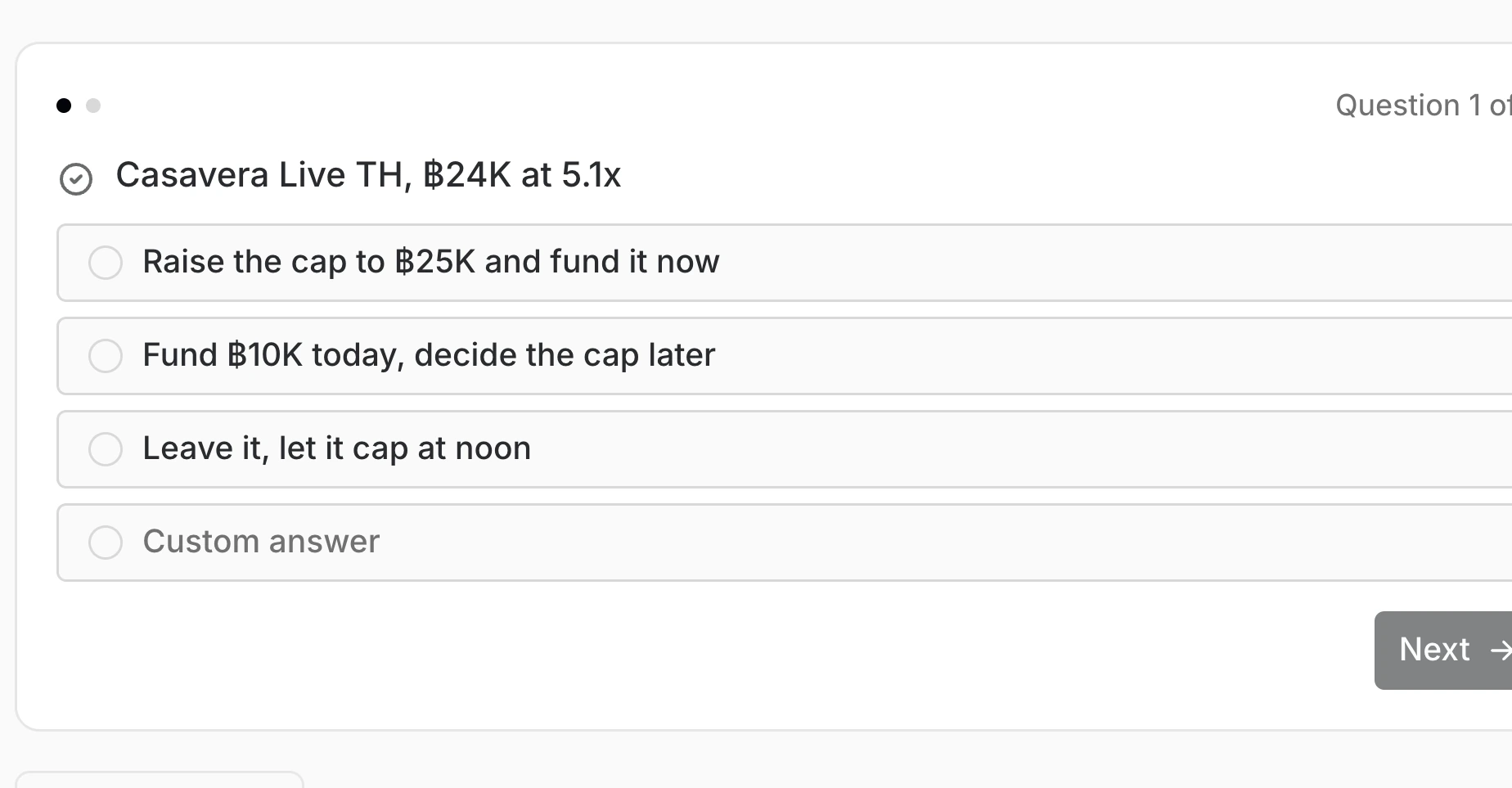
Answer the agent's question in one tap
When a call is too big to make alone, the agent asks with the options priced: fund it now, fund part and decide the cap later, or leave it.
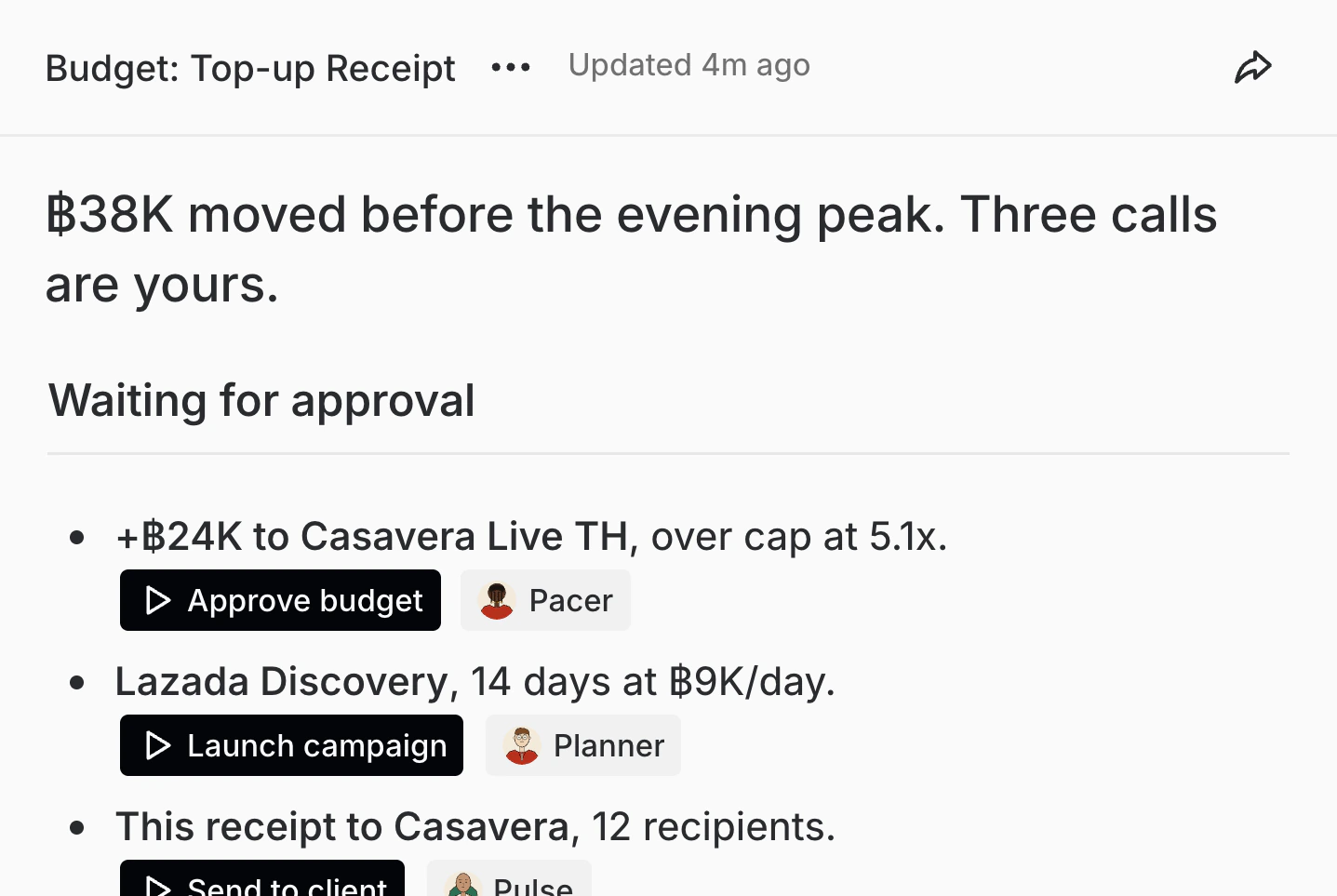
Approve the calls with their evidence
Three calls wait for you, each with its action, its agent and the reasoning beneath it, so one tap is an informed approval.
Keep signals informed and timely.
01
How much
Budget, sized against what it will earn.
- Raise a daily budgetA campaign is pacing to run dry, with the new figure priced.


- Raise a budget capA winner stops earning the moment it runs dry, so move the cap.
- Top up a walletA shortfall priced before the evening peak, ready for approval.


- Hold a budgetThe pacing is right and the return holds, so leave it alone.
- Reconcile the monthDay budgets set against the month's plan, so the gap closes.


- Fund part, cap laterA split call, when the full ask is over what the rules allow.

02
How hard
Bids and targets, set to what the market bears.
- Lower an ROI targetA target is set so high the campaign cannot spend, so lower it.
- Lower an object targetThe same call, one level down, made on a single ad object.
- Set a bid capA ceiling on the bid, so auctions cannot buy a worse return.
- Hold a bid changeA bid change waits for the afternoon read, not morning noise.
- Keyword pass firstMore budget at a higher CPC buys inflation, so fix keywords first.
- Raise a ROAS floorA floor under return, so spend stops where it stops paying.

03
Where
Which market and network earns the next dollar.
- Shift the regional mixMove budget between markets toward the return each one gives.
- Hold a networkPause a network's spend while its return sits below plan.

- Scale a winnerA market compounding into payday gets more room to spend.
- Move between networksShift from a network at a high CPM to one at a lower CPM.
- Plan a market by dayDouble days and paydays marked once, then a target per market.
- Open a new marketA new country and its networks join the same plan and book.

04
What
Which product and creative the money should back.
- Restock before adsA product runs dry within days, so stock comes before spend.
- Advertise a best sellerA product that sells well alone and runs no ads gets a budget.
- Cut spend on non-sellersA product took ad spend and sold nothing the same week: stop it.
- Rotate a tired creativeHook and hold rates are falling, so a fresh video takes over.

- Brief a new campaignA gap in coverage becomes a brief that an agent can write.


- Retire a placementA placement that no longer earns its slot is paused, history kept.
05
When
The moment a move pays most.
- Before the evening peakFund the hours that carry the day's GMV, not the leftover ones.
- Ahead of a double dayRaise budgets and caps for a sale day before it begins, not during.
- On paydayA payday window gets its own target, set once and then held.
- On a scheduleA read or a move set to run at a fixed hour, on its own.
- The moment a rule firesA guard acts the moment it trips, inside the limits you set.
- When someone can approveA call waits in the Inbox until the right person can say yes.